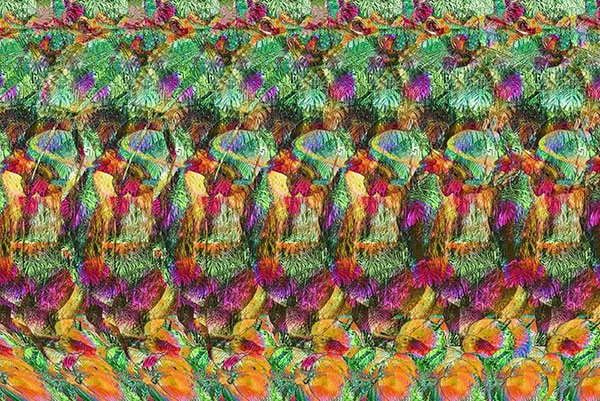
The ‘Truth’ the Stereogram shows us is there in front of us.
~ T.R. Cordón
Stereograms are images designed to create the illusion of three-dimensional depth in a two-dimensional image. When viewed correctly, a hidden 3D shape or scene “pops out” from a seemingly random pattern of colors or dots. The most famous type is the autostereogram, popularized in the 1990s by the Magic Eye books.
How do they work?
Stereograms trick the brain using binocular disparity; the slight difference in images perceived by each eye due to the horizontal distance between them. By forcing your eyes to unfocus in a particular way (like looking “through” the image), your visual system reconstructs a depth map, revealing the hidden 3D shape.
This uses the same neural mechanisms that help us see depth in real life. So, stereograms are not only a fun visual challenge, but also scientifically interesting.
Your brain is always trying to build a 3D understanding of the world from the images your eyes receive. Normally, it uses cues like perspective, shading, and motion. Stereograms strip those away and challenge your brain to rely purely on the slight changes between repeated patterns, hacking your depth-perception system.
Stereograms also a great example of top-down processing in vision. You don’t see the image until your brain decides what it should be seeing—and once you see it, you can’t unsee it.
Types of stereograms
Stereograms come in several types:
-
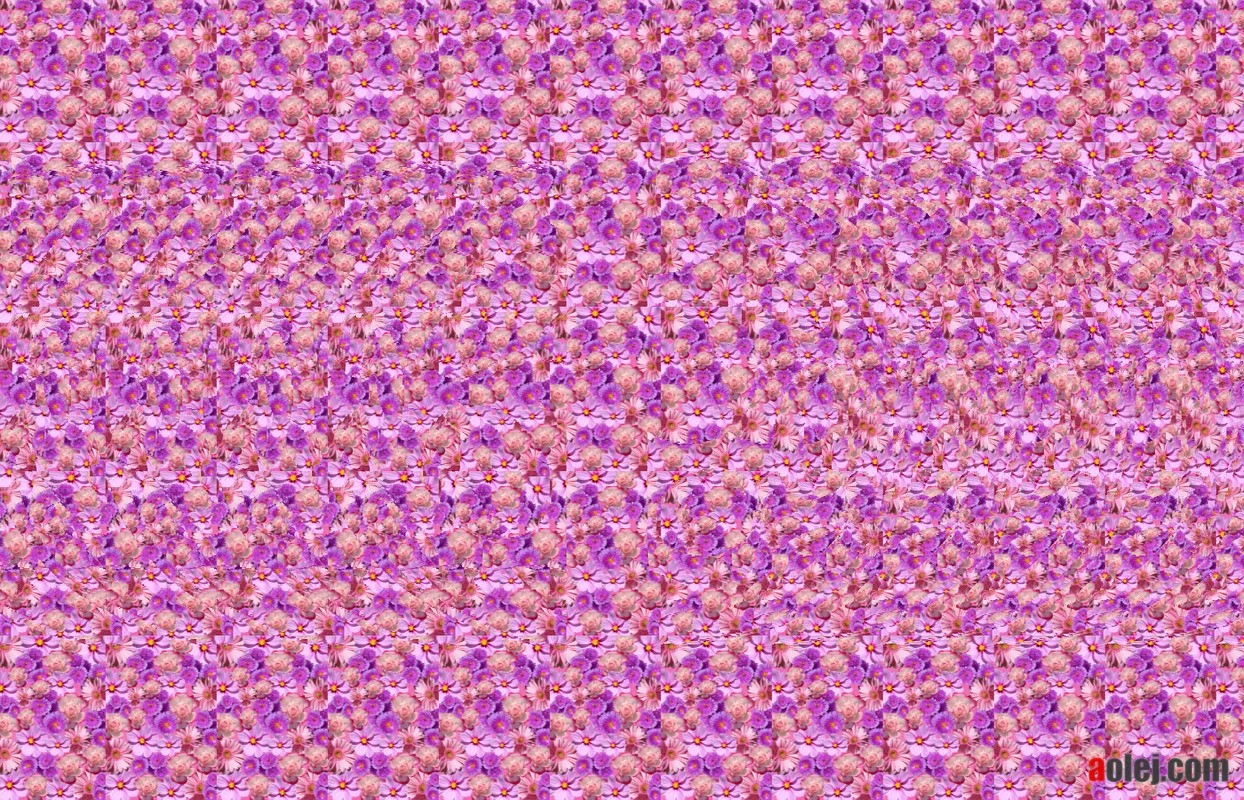
Autostereograms: These illusions contain a repeating pattern that hides a depth map. These are the popular Magic Eye images.
-
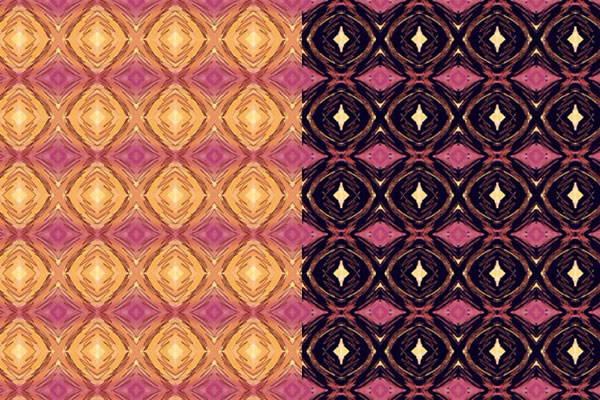
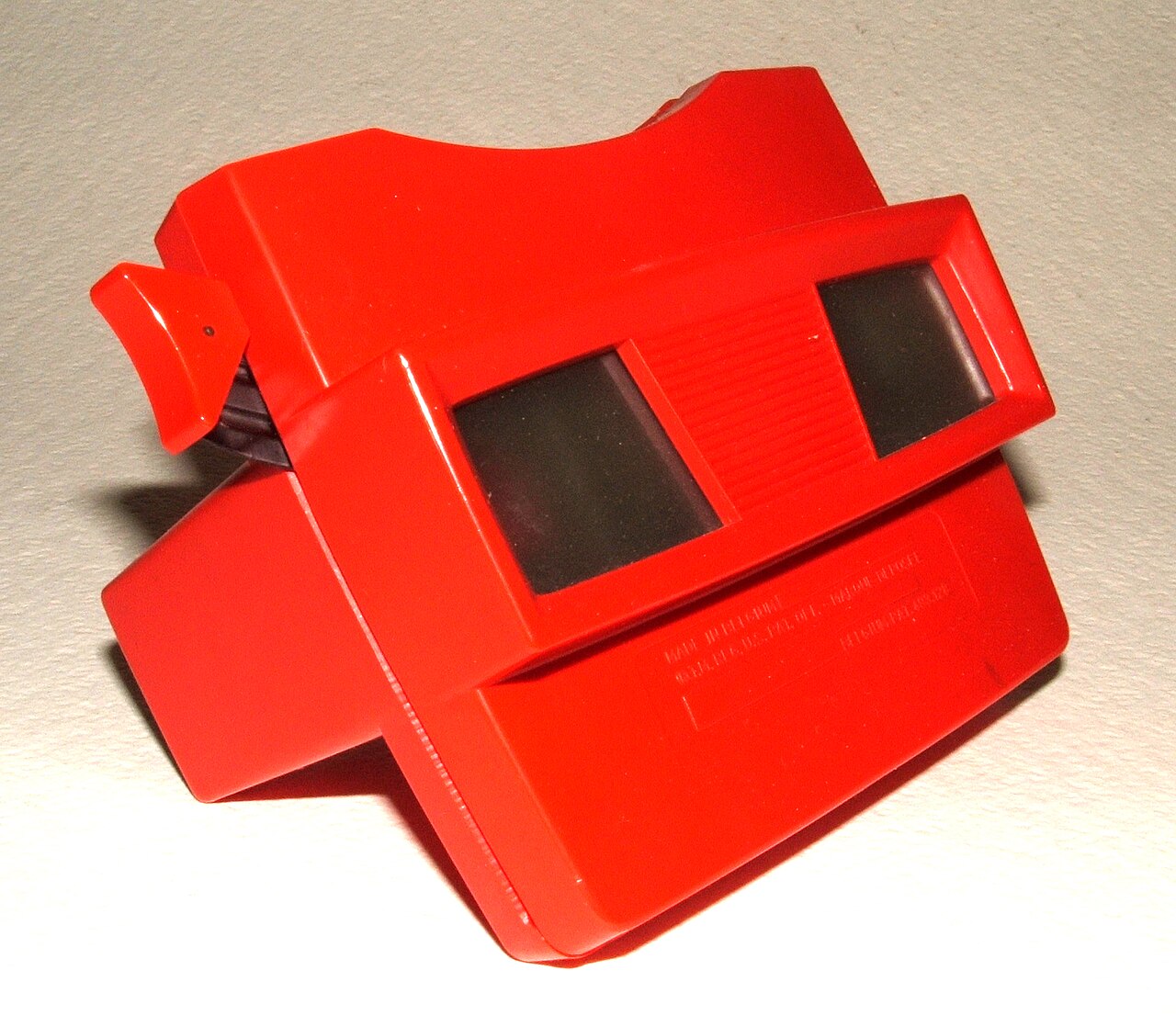
Stereo pairs: Two side-by-side images slightly offset for each eye, similar to how polarized 3D glasses in modern cinemas or VR work.
-
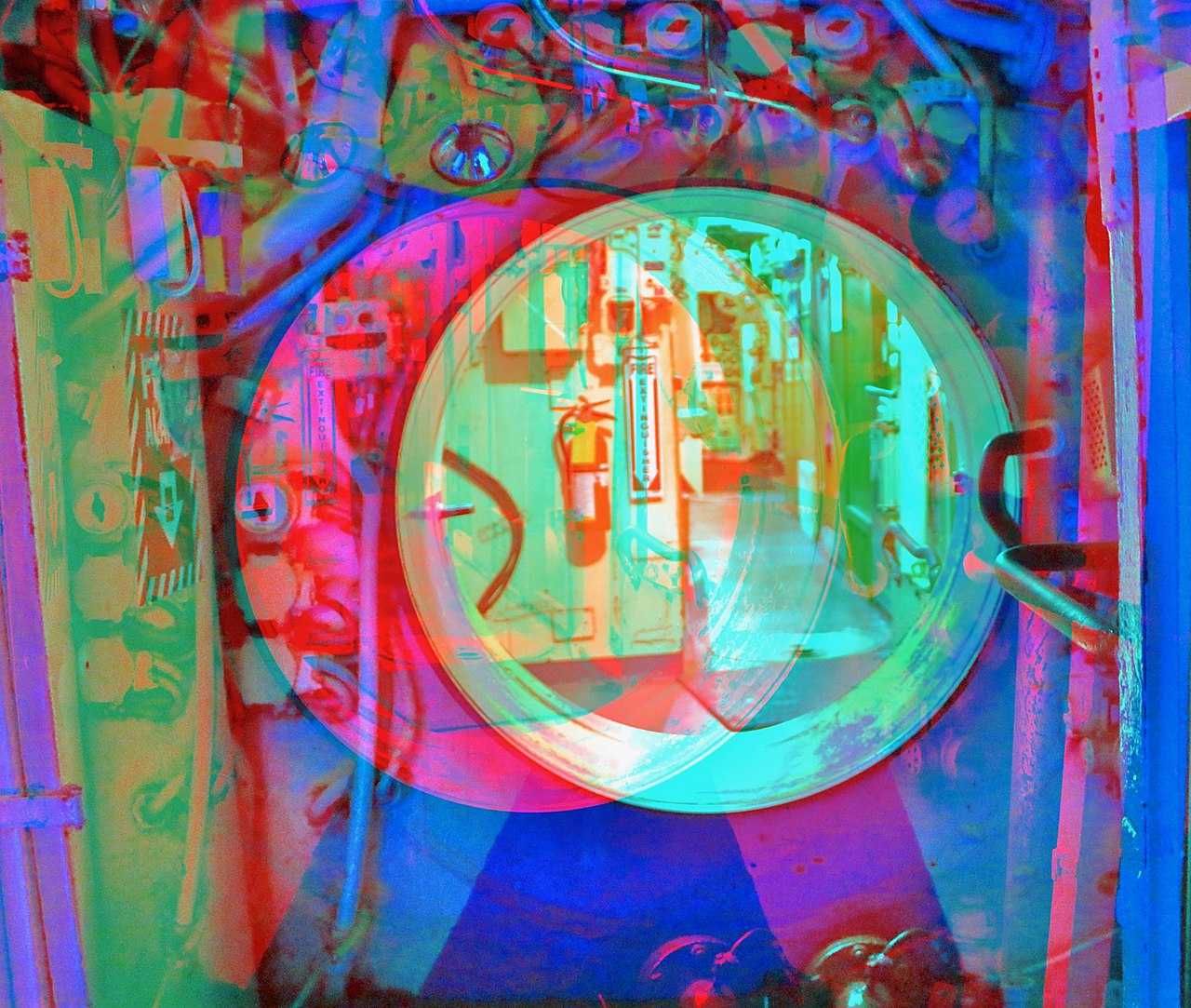
Anaglyphs: These require the red-cyan glasses to separate the image for each eye, filtering out different images for each eye.
How to see a stereogram
If you’re new to stereograms, they can be frustrating at first, but once your eyes get the trick, it becomes almost second nature.
Here’s how to view an autostereogram (Magic Eye style):
-
Hold the image close to your face, almost touching your nose, and don’t try to focus on the pattern.
-
Relax your eyes. Instead of looking at the image, try to look through it, as if your focus is drifting beyond the surface.
-
Slowly move the image away while keeping your eyes unfocused. You might feel your eyes crossing or diverging.
-
The hidden 3D shape will appear to “pop” into depth at a certain distance.
Once your brain locks in the depth cue, it becomes easier to repeat. It’s like teaching your brain a new way to see, tapping into your binocular vision in an different way.
What makes them so special?
Stereograms are special optical illusions and not just visual gimmicks. They are a real-time demonstration of how perception works. They show:
-
Binocular vision in action: The brain uses the slight differences between what each eye sees to build a sense of depth.
-
Top-down processing: You can’t “see” the hidden image until your brain interprets the patterns correctly.
-
Persistence of perception: Once your brain recognizes the image, it’s very hard to unsee it.
In that sense, stereograms feel like a visual breakthrough. You can see the image through the noise, simply because you looked at it differently.
A brief history of stereograms
The origin of stereograms is almost 2 centuries old. In 1838, British scientist Sir Charles Wheatstone discovered that presenting each eye with a slightly different image could create a convincing sense of depth. He demonstrated this using a stereoscope, proving that depth perception comes from the brain, not from the image.
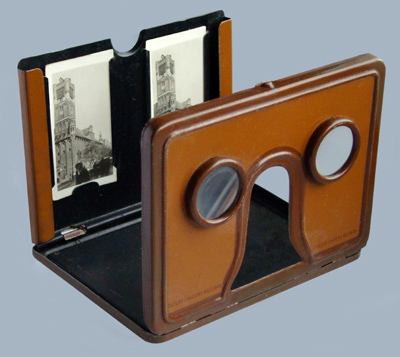
Image Source: Wikipedia
In the 1950s and 60s, vision researchers and artists began experimenting with random dot patterns. Psychologist Béla Julesz made a breakthrough in 1960 when he showed that depth perception could emerge even without recognizable objects, using what became known as random dot stereograms.
A random dot stereogram is a stereo pair of two images with randomly arranged dots. The images are copies of eachother, but a set of dots that form the image have been slightly moved horizontally. By using a stereoscope, each eye sees only one image. The brain then puts them together and sees depth in the difference. These experiments were important to understand how our visual system constructs space.
The modern autostereogram works in a similar way, but the disparity is placed in a repeating pattern within a single image. A pattern of random dots is repeated many times in an image and each block of the pattern has a slight disparity, together forming a new image.
The autostereogram was developed in the late 20th century, with the help of computers that could generate precise repeating patterns. These images became very popular in the 1990s through the Magic Eye books, turning a once-specialized vision experiment into a global visual phenomenon.
Why can’t everyone see stereograms?
Not everyone can see stereograms right away. Some people struggle to see them at all. This isn’t about intelligence or effort. It depends on how your visual system works.
- Differences in binocular vision
Stereograms rely on both eyes working together to detect small differences between images. If someone has reduced binocular vision (for example because of misaligned eyes or a lazy eye), it can be difficult or impossible to see the hidden depth. - Difficulty relaxing focus
To see an autostereogram you need to override your normal focusing habits. Instead of focusing on the image, you need to look through it, as if the image is farther away than it actually is. Some people find it hard to relax their eyes in this way, especially if they’re used to sharp, focused viewing (like reading or working on a computer). - Viewing distance and screen factors
The illusion depends heavily on the distance from the image, the creen size or print quality, lighting conditions. If the image is too small, too large, or poorly displayed, the depth effect may not work properly. - Lack of practice
For many people, it simply takes time. The brain has to learn how to see stereograms. Once it clicks, it usually becomes much easier to repeat.
Stereogram Video
The stereogram doesn’t need to be a static image. Once your eyes have found the right depth perspective, you can look around and blink without losing the image.
Young Rival made an entire music video as a stereogram.